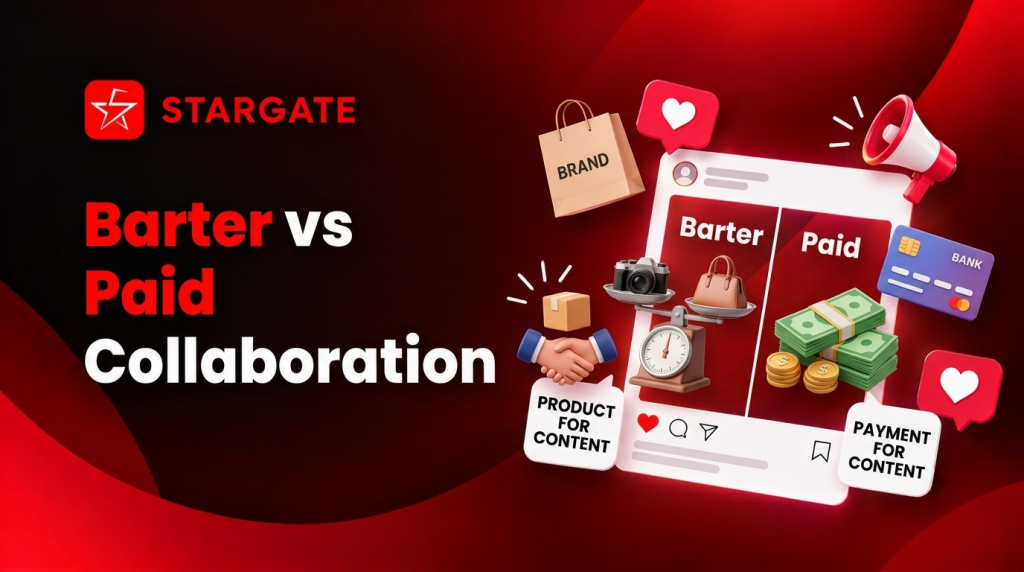
Quick Answer: Barter is worth accepting when the product genuinely benefits you and the collaboration requires relatively little work. If a brand expects multiple posts, professional content, revisions, or commercial usage rights, a paid collaboration is usually the better choice. You can also negotiate a hybrid deal that combines the product with a payment, especially when both sides see value in the partnership.
A brand reaches out with a collaboration opportunity. You like the brand, the product looks interesting, and the campaign seems relevant to your audience. Then you notice one important detail, there is no payment involved. Instead, the brand is offering free products or services in exchange for content.
Should you accept it?
For creators, deciding between a barter vs paid collaboration is not always straightforward. A barter deal can be useful when you are starting out or when the product offers genuine value. But in other situations, accepting products instead of money can mean spending hours on content without receiving fair compensation. The right decision depends on what the brand wants, how much work is involved, and what you receive in return.
This guide breaks down the difference between barter and paid collaborations, when each one makes sense, and how to decide which deal you should accept.
What You Actually Get From a Barter Deal?
A barter collaboration is an arrangement where a creator receives products, services, or experiences instead of direct monetary payment.
For example, a skincare brand may offer products in exchange for a Reel and a few Stories.
The value of a barter deal depends on more than the product’s retail price.
Products or Services You Actually Want
A barter deal can be worthwhile when the product has genuine value to you.
For example, you may receive:
- A product you were already planning to purchase
- A hotel stay
- A relevant experience
- Premium services related to your niche
However, a product is only valuable if you actually want or need it.
A brand may offer a product worth ₹5,000, but if you would never spend your own money on it, that value may not mean much to you.
Before accepting, ask yourself:
Would I buy or use this product even without the collaboration?
If the answer is yes, the barter deal may be worth considering.
Portfolio and Brand Experience
For newer creators, barter collaborations can also provide practical experience.
Working with relevant brands can help you understand:
- Campaign briefs
- Brand communication
- Content approvals
- Deliverable requirements
- Sponsored content creation
These collaborations can also help build a portfolio.
However, creators should avoid accepting every barter opportunity simply to add brand names to their profile. The collaboration should still align with their content and audience.
What You Actually Get From a Paid Deal?
The paid collaboration meaning is simple: a brand provides financial compensation in exchange for promotional content or campaign participation.
The payment may be a fixed amount based on the campaign requirements. A paid collaboration recognises that creating content involves real work.
A campaign may require you to:
- Develop a creative concept
- Write a script
- Shoot content
- Edit videos or images
- Communicate with the brand
- Make revisions
- Publish the content
This takes time and skill.
Direct Income
The biggest advantage of a paid deal is obvious: it generates income.
Creators who want to turn content creation into a sustainable profession cannot rely entirely on free products.
Paid collaborations allow creators to build a revenue stream from their work.
Clearer Campaign Expectations
Paid campaigns are also more likely to have defined expectations.
A collaboration may clearly mention:
- Number of deliverables
- Payment amount
- Campaign timeline
- Revision requirements
- Usage rights
- Exclusivity requirements
This makes it easier for both the creator and the brand to understand the agreement.
Barter vs Paid Collaboration: Side-by-Side Comparison
| Factor | Barter Collaboration | Paid Collaboration |
| Compensation | Products, services, or experiences | Direct monetary payment |
| Best for | Selective opportunities and early-stage creators | Professional creator campaigns |
| Income | No direct income | Generates revenue |
| Product value | Depends on whether you actually need it | Not dependent on product value |
| High-effort campaigns | Usually less suitable | More appropriate |
| Long-term sustainability | Limited | Better for building a creator business |
| Negotiation | Often informal | Usually more structured |
| Best use case | Relevant product with genuine personal value | Campaigns requiring significant time and effort |
The main difference is straightforward.
Barter provides value through products or services. Paid collaborations provide financial compensation for your work.
When Barter Is the Right Call?
Barter is not always a bad option.
There are situations where accepting a product instead of payment can make sense.
When You Are Just Starting Out?
If you are new to brand collaborations, a relevant barter opportunity can help you gain experience.
You can learn how campaigns work and create examples of branded content for your portfolio.
However, this does not mean every new creator should work for products indefinitely.
Be selective about the brands you work with.
When the Product Has Genuine Value?
A barter deal may make sense when you genuinely want the product or service.
For example, a travel creator may find value in a hotel collaboration. A beauty creator may receive products they regularly use.
The key is whether the product offers real value to you.
When the Brand Is Relevant to Your Niche?
A collaboration with a relevant brand can also be strategically useful.
Working with brands in your niche can strengthen your portfolio and help establish your creator identity.
A fashion creator working with a relevant clothing brand, for example, may benefit more than they would from accepting unrelated products.
When to Refuse Barter Outright?
Not every product exchange is worth accepting.
Sometimes, the brand’s expectations are much higher than the compensation being offered.
When the Brand Wants Multiple Deliverables?
If a brand expects several Reels, Stories, posts, revisions, and detailed production work, a free product may not be fair compensation.
More deliverables mean more time and effort.
Before accepting, consider everything involved in producing the content—not just the time it takes to upload it.
When You Do Not Want the Product?
A free product is not automatically valuable.
If you do not want it, need it, or believe it fits your audience, there is little reason to spend your time creating content for it.
Your time is still part of the deal.
When the Brand Wants Usage Rights?
Creators should pay close attention to how their content will be used.
If a brand wants to use your content for:
- Paid advertisements
- Website promotions
- Digital campaigns
- Other commercial marketing
the value of the deal changes.
Commercial usage of your content can provide additional value to the brand. This should be discussed before agreeing to the collaboration.
When the Collaboration Requires Too Much Work?
If the effort required is significantly greater than the value you receive, it may be time to decline or negotiate. A barter deal should not become unpaid professional work.
How to Convert a Barter Deal Into a Paid One
Receiving a barter offer does not mean you only have two choices: accept or reject. You can negotiate.
Start by showing interest in the brand and then explain that the proposed deliverables fall under your paid collaboration work.
You could say:
“Thank you for reaching out. I would love to explore a collaboration because the brand aligns well with my audience. For the proposed deliverables, I currently work on a paid collaboration basis. I’d be happy to discuss a suitable package for the campaign.”
The message is polite and professional.
You are not rejecting the brand. You are simply explaining the value of the work involved.
Offer Different Options
You can also offer different collaboration formats.
For example:
A simple product mention may work as a barter collaboration.
A professionally produced Reel could be part of a paid collaboration.
This gives the brand options while allowing you to protect your time.
Can a Collaboration Be Part Barter and Part Paid?
Yes, a collaboration can include both a product and financial compensation.
This is often called a hybrid arrangement.
For example, a creator may receive a product along with a fixed payment for creating campaign content.
This can work when the product has genuine value to the creator but the campaign also requires significant time and effort.
A hybrid deal can be useful because both sides receive something they value.
The important part is making sure the terms are clear before the campaign begins.
Final Thoughts
The choice between a barter deal or paid deal should come down to one thing: value. Barter can be useful when the collaboration gives you something you genuinely want, helps you build relevant experience, or supports your creator journey.
Paid collaborations are more suitable when your content requires significant time, creative effort, and professional skills. Instead of accepting every offer, evaluate each campaign individually.
Look at what the brand expects. Consider how much work is involved. Understand what you are receiving in return. The best collaboration is not always the one offering the most expensive product or the highest payment. It is the one where the value exchange makes sense for both you and your work.
Download Stargate now on the App Store or Google Play and start discovering, connecting, and collaborating today!
FAQs
Is barter better than paid collaboration?
- Neither is always better. Barter can be useful when the product or service offers genuine value, while paid collaborations provide direct income. The right option depends on the campaign requirements and the value exchange.
At what follower count should I stop accepting barter?
- There is no specific follower count. Instead, consider the work required, your audience engagement, niche, content quality, and the value of the offer. Even creators with smaller audiences may deserve payment for high-effort campaigns.
How do I ask a brand to pay instead of barter?
- Thank the brand for the opportunity and explain that the proposed deliverables fall under your paid collaboration work. You can then discuss your rates or suggest a suitable paid package.
Can a collaboration be part barter and part paid?
- Yes, collaboration can include both products and monetary compensation. This can work well when the creator values the product but the campaign also requires professional work.